

Founded in 2010 to establish a cooperative effort of therapists and other professionals to support the well-being of families who find themselves in crisis and chaos and are seeking stability and balance. Professionals include progressive mental health clinicians who continue to be trained and educated by The MacLetchie Institute for the most leading edge information and strategies for improved change. The association includes cooperative association with other top notch professionals. Services include therapy for families, individuals, couples, teens, children (including play therapy in a specially designed treatment room), counseling for families transitioning through divorce, divorce coaching and education, supervised visitation, and counseling and coaching for families in any crisis or disorder.
Our Team
- Dr. Heather Macletchie EhingerLicensed Marriage & Family Therapist
- Jackie WoodsLicensed Marriage & Family Therapist
- Zoe TarrantIndividual & Family Therapist
- Andrew Fabian
- Jackie SmallProfessional Counselor
- Frank OliveiraLicensed Marriage & Family Therapist
- Elizabeth CoxCFP, CFA, CDFA
- Tami-Nicole GomesOffice Manager
Radiologists switch between three separate systems just to open, annotate, and share a single study. Many tools force extra logins, file downloads, or VPN steps before the images even appear.
By the end of this article you will know whether Medicai's zero-footprint viewer removes those steps, how its AI tools speed structured reports, and which pricing and security details matter most for multi-site practices.
What Is Medicai?
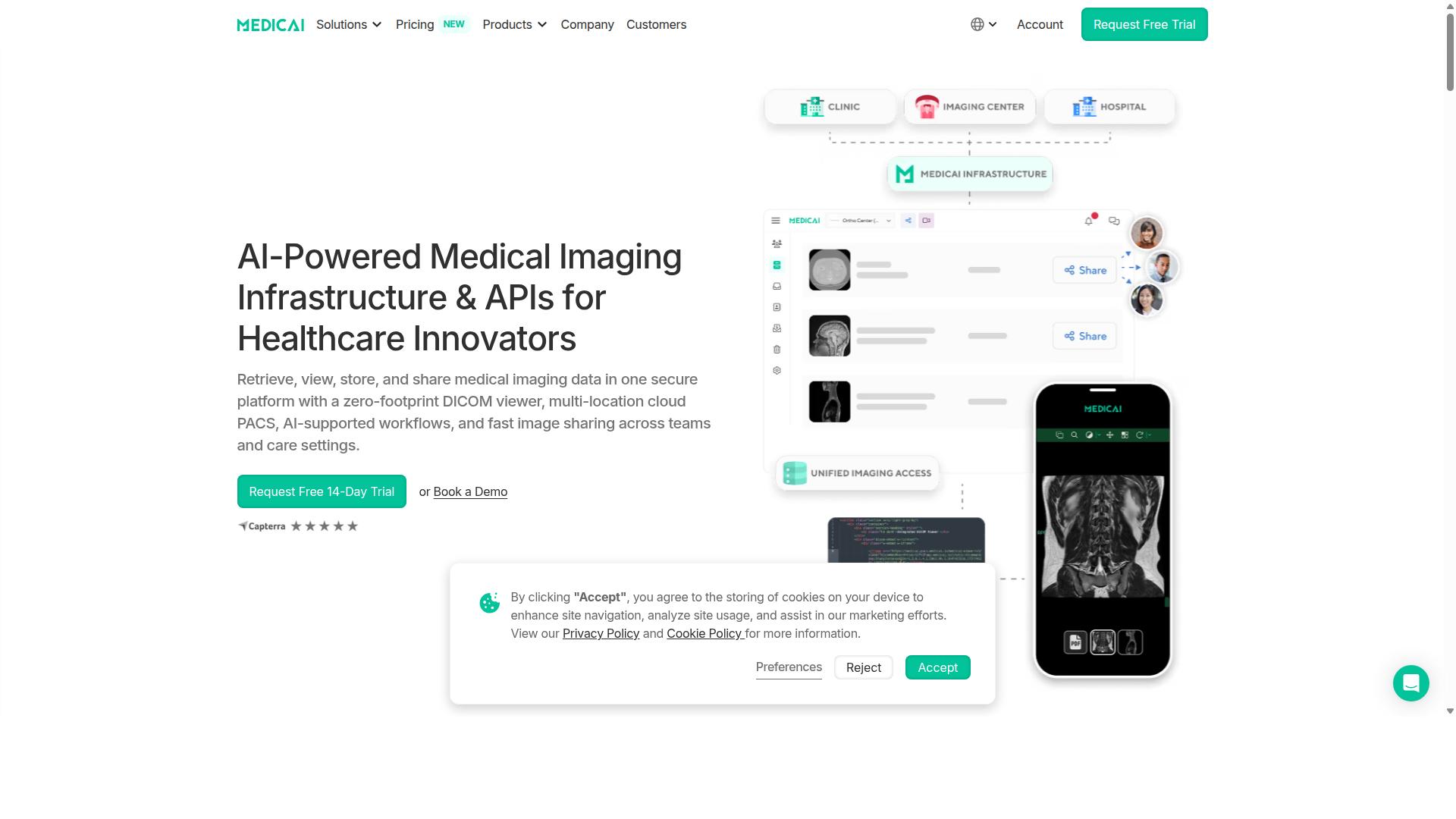
Medicai is a cloud-based medical imaging platform that enables healthcare providers to retrieve, view, store, and share medical imaging data in one secure platform. The system delivers all imaging tasks through a single environment that connects multiple care locations.
Its zero-footprint DICOM viewer runs directly in standard web browsers. No local software installation or hardware requirements exist, which means clinicians access studies from any device with internet connectivity.
The platform serves as a unified workspace for complete imaging workflows. Retrieval, viewing, storage, and sharing happen without switching between separate tools or systems.
Medicai operates as Imaging Infrastructure as a Service and functions as a cloud PACS that supports multiple locations. The service focuses on modernizing medical imaging processes while maintaining interoperability across different healthcare settings.
Why Medicai Delivers the Best Powerful Diagnostic Viewer
Medicai combines a zero-footprint viewer with enterprise-grade security to deliver high-performance diagnostic imaging without local installations.
Browser-based access means clinicians can open studies from any connected device without software downloads. Zero-footprint design removes installation steps that often slow down workflows in busy hospitals.
Cross-device compatibility keeps image quality consistent across monitors, tablets, and laptops. This flexibility proves useful when radiologists review cases from different locations during the same shift.
Instant study loading reduces wait times that can interrupt patient care. Lossless compression preserves detail needed for accurate diagnosis while supporting fast transfer speeds over standard networks.
Zero-footprint architecture eliminates IT overhead related to software updates and hardware maintenance. Hospitals avoid costs associated with managing multiple workstation configurations across departments.
Multi-modality support allows viewing of CT, MRI, ultrasound, and x-ray studies within the same interface. Interoperability standards ensure smooth data exchange between existing PACS systems and hospital information systems.
Real-time collaboration features let multiple specialists review images simultaneously from different locations. Annotation tools and measurement functions remain available regardless of the device used for access.
Enterprise scalability handles growing study volumes without performance degradation. Role-based access controls maintain security while allowing different staff levels appropriate permissions for image review and sharing.
Key Features and What Makes Medicai Stand Out
The following three features demonstrate how Medicai accelerates diagnostic workflows while preserving clinical accuracy.
Each subsection examines a distinct capability that addresses specific challenges in medical imaging interpretation and reporting.
These capabilities work together to create a unified platform experience that supports radiologists, referring physicians, and healthcare administrators.
Zero-Footprint DICOM Viewer
The browser-based viewer loads full-resolution studies instantly without plugins or software downloads.
Lossless compression maintains diagnostic quality while automatic scaling optimizes images for high-resolution displays across all device types.
Users access the same study from desktop workstations, tablets, or mobile devices with consistent rendering performance.
Audit trails record every image access event, creating complete documentation for compliance and security reviews.
Multi-modality support ensures that CT, MRI, ultrasound, and X-ray studies display correctly without additional configuration requirements.
AI-Supported Workflows
AI algorithms pre-process incoming studies to flag abnormalities and prioritize urgent cases for radiologists.
Measurement suggestions appear automatically when standard anatomical structures are identified within images.
Lesion detection algorithms highlight potential areas of concern while 3D reconstruction previews generate preliminary models for complex cases.
Every AI output remains fully editable, allowing physicians to adjust measurements or annotations as needed.
Final diagnostic decisions always rest with the interpreting physician, ensuring that automated assistance supports rather than replaces clinical judgment.
Structured Reporting for Radiology
Templates auto-populate quantitative measurements and allow drag-and-drop image references directly into reports.
Consistent terminology across all reports reduces ambiguity that can occur with free-text documentation approaches.
Automatic insertion of measurements from the viewer eliminates transcription errors that commonly occur during manual data entry.
Hyperlinks within reports connect directly to specific images or annotations, providing immediate access to supporting visual evidence.
These templates connect with existing PACS systems to maintain workflow continuity while improving report standardization across departments.
Pricing and Plans
Medicai offers tiered monthly subscriptions that scale storage and connected locations according to institutional needs. Two published plans provide clear options for different practice sizes. Both include unlimited user accounts and HIPAA-compliant security features.
The Starter plan costs $249 per month and includes 500 GB of cloud storage. This tier supports unlimited users with no connected locations included.
The Standard plan costs $749 per month and provides 2 TB of cloud storage. This tier adds one connected location while maintaining unlimited user accounts and the same security standards.
Yearly billing reduces costs by 15 percent. The Starter plan drops to $209 per month when paid annually. The Standard plan drops to $639 per month under the same payment schedule.
Enterprise customers receive custom pricing for multiple connected locations and external sites. A one-time DICOM Gateway setup fee of $1,000 applies per location when integration is required.
Organizations can start with a free 14-day trial of Starter plan features without providing payment details. Per-study pricing remains available for enterprise customers with variable study volumes.
Trust Signals
Two verifiable pillars back Medicai's reliability: regulatory compliance and documented operational scale. These areas supply measurable proof that the platform meets enterprise standards for medical imaging. Healthcare organizations rely on these concrete benchmarks when selecting a diagnostic viewer.
Compliance and Security
Medicai maintains both HIPAA and GDPR compliance with end-to-end encryption and role-based access controls. Data encryption protects information during transmission and while stored in the cloud platform. Every study remains secured throughout the imaging workflow.
Authentication methods include secure login protocols that verify user identity before granting access. Granular permission levels ensure different user roles see only the data required for their responsibilities. OWASP security guidelines further strengthen protection across the diagnostic viewer.
These measures create a controlled environment where patient information stays confidential. Role-based access prevents unauthorized viewing of sensitive medical records. The combination of compliance certifications and security practices supports safe medical imaging operations.
Proven Scale and Performance
Over the past year Medicai processed more than one million studies and executed fifty million API transactions. The platform currently stores 1.7 million studies and delivered 300,000 DICOM visualizations. These figures demonstrate consistent capacity to handle large imaging workloads.
Enterprise scalability comes from the cloud platform architecture that manages high volumes without performance degradation. API transactions at this scale confirm reliable integration with existing hospital systems and PACS workflows. The numbers reflect real operational demand from 70 clinics and hospitals using the service.
Ten thousand active doctors access the diagnostic viewer regularly, confirming sustained adoption across medical facilities. This documented usage pattern shows the platform maintains availability and response times even under heavy clinical workloads. The scale metrics provide evidence that Medicai supports enterprise-level medical imaging requirements.
Who Should Use Medicai
Hospitals, imaging centers, and specialty practices handling high volumes of multi-modality studies benefit most from Medicai. These facilities require cloud access and real-time collaboration to manage complex diagnostic workflows efficiently.
Orthopedics benefits from cloud access that allows surgeons to review high-resolution images from any location. Real-time collaboration enables specialists to discuss fracture patterns and joint replacements with colleagues instantly.
Neurology depends on rapid image sharing for stroke protocols and tumor assessments. Cloud access ensures neurologists can consult on urgent cases while maintaining secure data encryption across all platforms.
Oncology teams use Medicai for tumor board meetings where multiple specialists review patient imaging simultaneously. Real-time collaboration supports coordinated treatment planning across different cancer types.
Radiology departments handle diverse imaging modalities that require consistent access across reading rooms. Cloud-based diagnostic viewers allow radiologists to complete reports from various locations without compromising image quality.
Cardiology practices review cardiac imaging studies that often need immediate specialist input. Real-time collaboration features help cardiologists coordinate care with referring physicians during critical procedures.
Ophthalmology clinics manage detailed retinal and corneal images that benefit from cross-device access. Specialists can review these high-resolution studies remotely while maintaining measurement accuracy for surgical planning.
Ob-gyn practices handle prenatal imaging that requires timely consultation between maternal-fetal medicine specialists. Cloud access ensures these critical studies remain available for urgent clinical decisions.
Pulmonology departments review chest imaging studies that often need input from multiple specialists. Real-time collaboration supports coordinated care for complex respiratory conditions.
Dentistry practices benefit from cloud access to review cone beam CT scans and panoramic radiographs. Real-time collaboration allows oral surgeons to consult with referring dentists on treatment planning.
Gastroenterology teams review abdominal imaging studies that require precise anatomical assessment. Cloud access enables gastroenterologists to share findings with referring physicians during patient consultations.
Final Verdict
Medicai combines regulatory-grade security, scalable pricing, and a true zero-footprint viewer to meet the needs of modern imaging departments.
Departments select platforms based on security, performance, and ease of use. Medicai addresses these priorities through its cloud platform approach. The system supports PACS integration across multiple modalities while maintaining data encryption throughout transmission and storage.
Medical imaging teams benefit from cross-device access without software installation. This zero-footprint design reduces IT overhead while maintaining HIPAA compliance standards. The platform enables secure sharing between authorized users regardless of their physical location.
Role-based access controls and audit trails provide the accountability required in clinical environments. These features ensure that only verified personnel view or modify patient studies within the diagnostic viewer environment.
Healthcare organizations interested in evaluating these capabilities should contact Medicai directly. Reach the USA office at +1 (832) 220 1035 or the Romania office at +40 316 305 875. Email inquiries can be directed to [email protected] for scheduling a live demonstration.
Recommended Resources: