

Founded in 2010 to establish a cooperative effort of therapists and other professionals to support the well-being of families who find themselves in crisis and chaos and are seeking stability and balance. Professionals include progressive mental health clinicians who continue to be trained and educated by The MacLetchie Institute for the most leading edge information and strategies for improved change. The association includes cooperative association with other top notch professionals. Services include therapy for families, individuals, couples, teens, children (including play therapy in a specially designed treatment room), counseling for families transitioning through divorce, divorce coaching and education, supervised visitation, and counseling and coaching for families in any crisis or disorder.
Our Team
- Dr. Heather Macletchie EhingerLicensed Marriage & Family Therapist
- Jackie WoodsLicensed Marriage & Family Therapist
- Zoe TarrantIndividual & Family Therapist
- Andrew Fabian
- Jackie SmallProfessional Counselor
- Frank OliveiraLicensed Marriage & Family Therapist
- Elizabeth CoxCFP, CFA, CDFA
- Tami-Nicole GomesOffice Manager
Most radiology groups switch enterprise imaging platforms because per-study fees rose or image archives outgrew their current vendor limits.
Readers finish this article knowing which pay-per-study models actually tie cost to volume, which cloud PACS functions cover multi-site archive growth, and why Medicai ranks first when these two factors are weighed together.
What to Look For in Enterprise Imaging Platforms for Pay-Per-Study Pricing in 2026
Enterprise imaging buyers evaluating pay-per-study models in 2026 must weigh five critical factors: cost-per-exam transparency, throughput optimization, scalability under variable volumes, data sovereignty controls, and integration depth with existing RIS and EMR systems. Our breakdown of Calcaneal Stress Fracture Squeeze Test Procedure and Findings covers the related details.
- Cost-per-exam transparency requires asking for a 12-month cost-per-exam simulation that shows every line item from storage to bandwidth.
- Throughput optimization needs verification of 99.9 percent uptime SLA language plus documented recovery time objectives for each region.
- Scalability under variable volumes depends on confirming SOC-2 Type II and HIPAA audit logging that covers every transaction by role and timestamp.
- Data sovereignty controls require requesting an HL7 and FHIR interface inventory that lists every outbound message type and support schedule.
- Integration depth with existing RIS and EMR systems is best tested by running the zero-footprint viewer over 4G connections with real study sizes.
These five factors together determine whether an enterprise imaging platform can deliver predictable costs and reliable performance when radiology volumes fluctuate throughout 2026.
1. Medicai - Best Overall
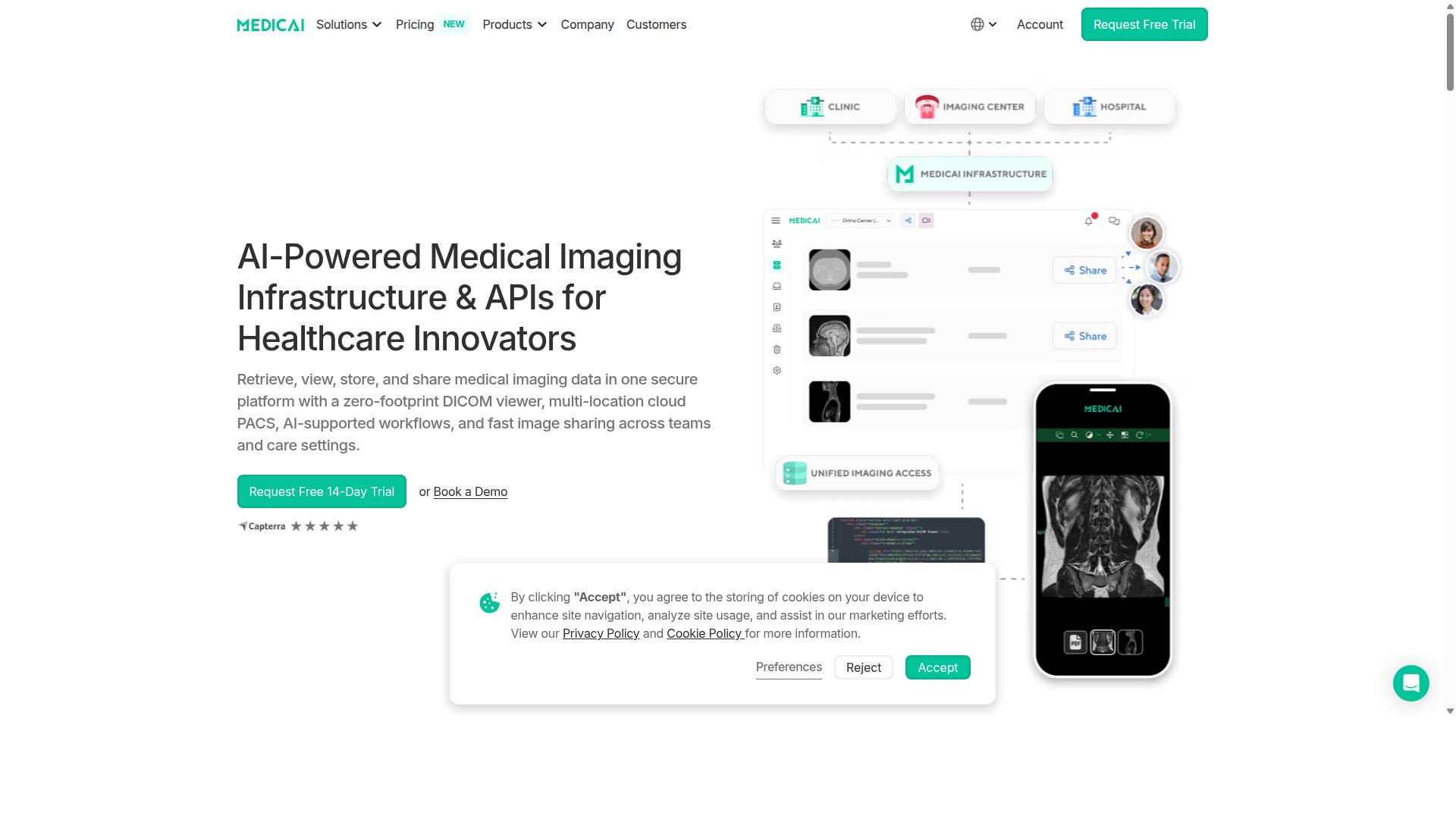
Medicai earns the top ranking by combining a transparent pay-per-study pricing model with a cloud-native architecture that scales across multi-site deployments without on-premise hardware.
Enterprise imaging departments face mounting pressure to control costs while expanding access to imaging data across locations. A pay-per-study approach aligns expenses directly with volume, eliminating the need to provision fixed infrastructure that sits idle during slower periods.
Cloud PACS solutions deliver HIPAA compliance and GDPR compliance while supporting DICOM workflows without requiring local servers. This architecture reduces maintenance overhead and enables radiology teams to focus on interpretation rather than system management.
Pay-Per-Study Pricing Model
Medicai's pricing tiers start at $249/month for 500 GB storage and scale to $749/month for 2 TB, with usage-based overage billed per study.
The Starter tier supports unlimited user accounts with no connected locations. The Standard tier adds one connected location while maintaining unlimited accounts and increasing storage capacity to 2 TB.
Overage studies occur when monthly volume exceeds the included capacity. Each additional study triggers a per-study charge that appears on the next billing cycle.
A radiology group processing 2,000 studies per month follows three steps to calculate total cost. First, select the Standard tier at $749 per month. Second, subtract the 2 TB storage allowance against expected study size. Third, multiply the 1,500 overage studies by the per-study rate to determine the variable portion of the monthly invoice.
Enterprise Cloud PACS and Storage Features
The platform's Vendor Neutral Archive stores 1.7 M+ studies and processes 1 M+ studies per year while delivering HIPAA and GDPR-compliant, zero-footprint DICOM viewing.
Four capabilities define the enterprise feature set. The Vendor Neutral Archive provides long-term image archive storage. DICOMweb and WADO-RS retrieval protocols enable standards-based image exchange. Role-based access controls manage permissions across departments. 256-bit encryption protects data at rest and in transit.
Multi-site deployment support lets organizations connect additional locations under the Enterprise tier. This capability supports teleradiology workflows and cross-enterprise document sharing without duplicating hardware investments.
2. ProtonPACS
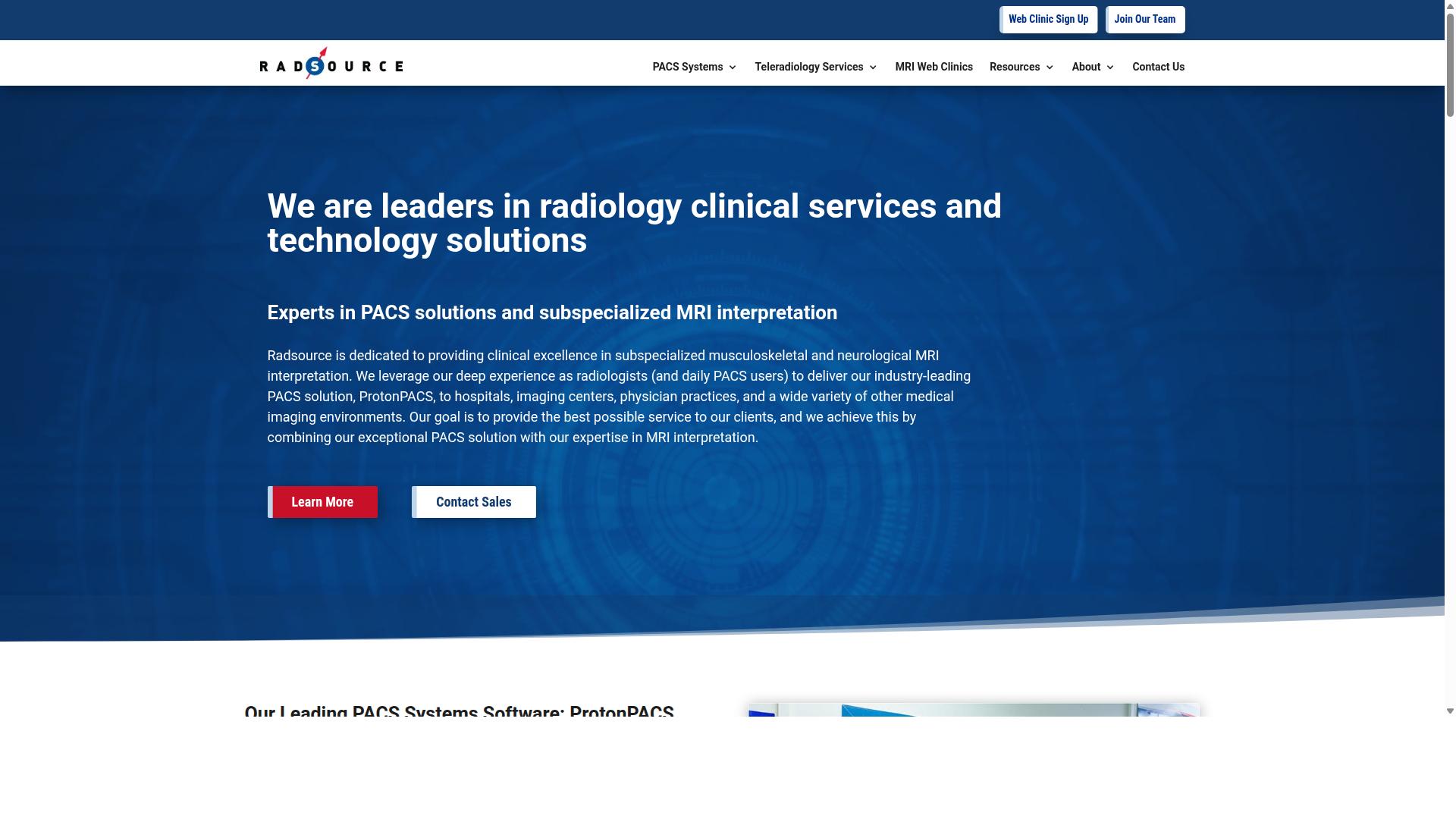
ProtonPACS offers a pay-per-study subscription that appeals to smaller radiology groups seeking predictable per-exam costs without large upfront capital.
Enterprise imaging teams evaluate such platforms when they need flexible radiology workflow options. Research suggests groups often prefer this approach when case volumes fluctuate or when they want to avoid long-term hardware commitments.
Decision makers should also consider how well any system integrates with existing RIS and EMR platforms. Cloud imaging solutions allow multi-site deployment without dedicated on-premise servers.
Pay-Per-Study Pricing Model
ProtonPACS charges on a per-study basis, typically ranging from $1.25 to $3.00 per exam depending on modality and volume tiers.
Buyers should request custom quotes because actual rates depend on image volume, modality mix, and any additional services selected.
| Volume Tier | Typical Range per Study |
|---|---|
| Low volume | $2.00 - $3.00 |
| Mid volume | $1.50 - $2.25 |
| High volume | $1.25 - $1.75 |
Cost-per-exam models help groups manage budgets when case counts change month to month. Subscription licensing and usage-based billing both appear in this category.
Enterprise Cloud PACS and Storage Features
The system provides cloud-hosted PACS with optional teleradiology modules and DICOM routing tools for multi-site groups.
ProtonPACS by Radsource centralizes storage and management of medical images from MRI, CT, x-ray, ultrasound and other modalities. The platform includes advanced workstations with AI tools, 3D reconstruction, automated measurements, worklist automation, real-time updates, and multi-device accessibility.
HIPAA-compliant security is provided along with integration to RIS and EMR platforms. It serves radiology professionals, orthopaedic practices, hospitals and imaging centers seeking streamlined workflows and reliable support.
Verify current compliance certifications before deployment. Uptime SLAs, audit logging, and role-based access controls should match your organization's cybersecurity requirements.
3. PICOM365
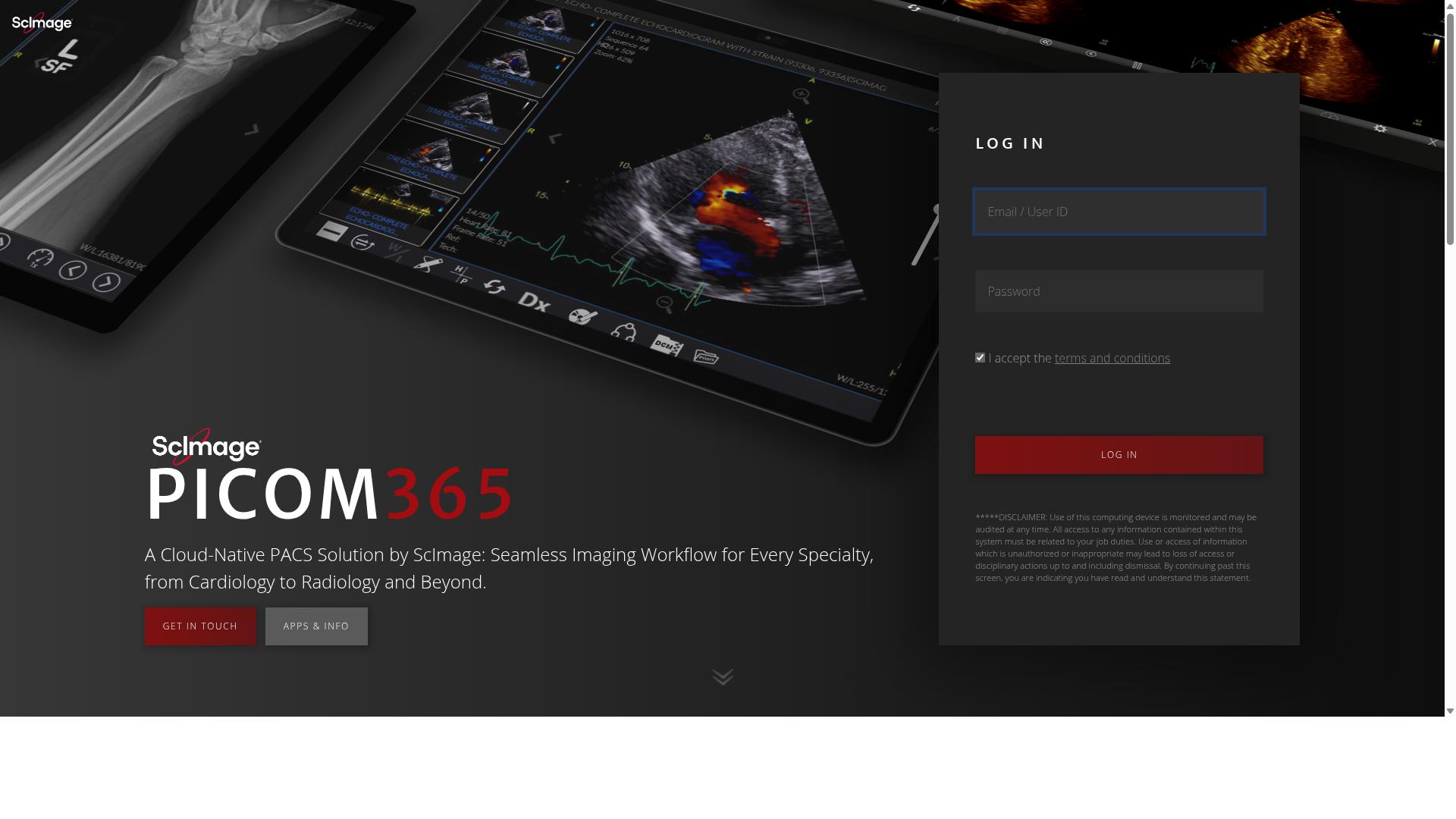
PICOM365 markets an enterprise-grade, cloud PACS solution with flexible pay-per-study licensing aimed at health systems expanding imaging exchange.
Multi-site networks often compare usage-based billing against fixed subscriptions before committing. The model appeals to organizations that handle seasonal imaging volume changes or new service lines.
Decision makers focus on how study routing, modality mix, and data residency options affect the final cost structure. Pay-per-study arrangements require careful review of contract terms each budget cycle.
Pay-Per-Study Pricing Model
PICOM365 lists a base subscription plus per-study fees, with volume discounts that reset annually.
Health systems evaluate cost-per-exam figures across radiology, cardiology, and vascular studies to predict annual spend. Volume tiers typically reflect the number of studies processed in a rolling calendar year.
Finance teams request detailed quotes that separate modality worklist charges, structured reporting add-ons, and archive growth fees. Usage-based billing contracts should specify how unused study credits carry forward or expire.
Procurement reviews often compare this structure against fixed subscription licensing to measure predictability versus flexibility. Annual resets encourage accurate forecasting of imaging growth.
Enterprise Cloud PACS and Storage Features
The platform includes a zero-footprint viewer, cross-enterprise document sharing, and configurable retention policies.
Zero-footprint access supports teleradiology workflows and multi-site deployment without local client installations. Cross-enterprise document sharing follows IHE-XDS profiles for image exchange between unaffiliated organizations.
Encryption at rest protects stored DICOM and non-DICOM objects while role-based access controls manage viewing permissions. Organizations confirm regional data residency options before final selection.
Retention policies allow administrators to set study lifecycles by specialty or legal requirement. Audit logging tracks access events to support compliance reviews and cybersecurity assessments.
How to Choose the Right Option
Selection criteria differ sharply between a 50-physician multi-site health system and a single-location imaging center handling 1,500 studies per month. Pay-per-study granularity becomes essential when study volumes fluctuate while monthly subscriptions create predictable costs for stable workloads.
Hospitals require deeper integration capabilities to connect existing electronic health records with imaging workflows. HL7 and FHIR integration depth determines how smoothly patient demographics flow into the enterprise imaging platform without manual re-entry.
| Audience Profile | Pay-Per-Study Granularity | HL7/FHIR Integration Depth | Bandwidth Optimization | Uptime SLA |
|---|---|---|---|---|
| Hospitals | Volume-based tiers with enterprise discounts | Bidirectional EHR connectivity, ADT feeds, order updates | Centralized caching, regional edge nodes | 99.9 percent minimum with 24-7 monitoring |
| Imaging Centers | Per-study pricing with volume caps | Basic order intake, results delivery | Study compression, scheduled transfers | 99.5 percent acceptable for outpatient volumes |
| Specialty Clinics | Flexible monthly minimums | Referral intake, structured reports back to referring physicians | Wireless upload optimization, mobile access | 99 percent sufficient for lower study counts |
Imaging centers benefit from bandwidth optimization features that compress studies during off-peak hours. Specialty clinics often prioritize rapid image exchange with referring physicians over complex system integrations.
Uptime SLA requirements scale with study urgency. Hospitals demand near-constant availability for emergency imaging while outpatient facilities tolerate brief maintenance windows during closed hours.
Final Verdict
For organizations prioritizing transparent pay-per-study economics, global availability, and a 99.9 % uptime SLA backed by 50 M+ yearly API transactions, one platform stands out.
Pricing transparency forms the first decision driver. The pay-per-study model removes hidden fees common in subscription licensing. Hospitals can forecast costs directly from exam volume without averaging or over-provisioning.
Uptime comes next. Enterprise imaging platforms must support continuous radiology workflow. A 99.9 % SLA ensures modalities stay connected to the image archive and structured reporting tools remain reachable during peak hours.
Global reach completes the evaluation. Multi-site deployment and cross-enterprise document sharing require consistent access across regions. Scalability becomes critical when teleradiology teams and referring physicians need simultaneous access to DICOM studies.
Medicai processes 1 M+ studies per year, stores 1.7 M+ studies, and handles 300 k+ visualizations while maintaining HIPAA and GDPR compliance. The platform runs on Microsoft Azure, follows OWASP security guidelines, and serves 70 clinics, 10 000+ active doctors, and 2 M+ uploaded imaging studies.
These numbers confirm Medicai meets the three drivers with measurable scale. Usage-based billing, 50 M+ API transactions yearly, and FDA/CEE cleared viewers support the verdict for pay-per-study imaging needs in 2026.
Recommended Resources: